Kurs
Barn och unga
Teater barn 10-
Ort: ÖrebroStartdatum: 3 Sep 2026Tid: 18:05-19:35Antal tillfällen: 12 st tillfällenDagar: Mån, Ons, TorsPris: 2 240 kr
En plats kvar
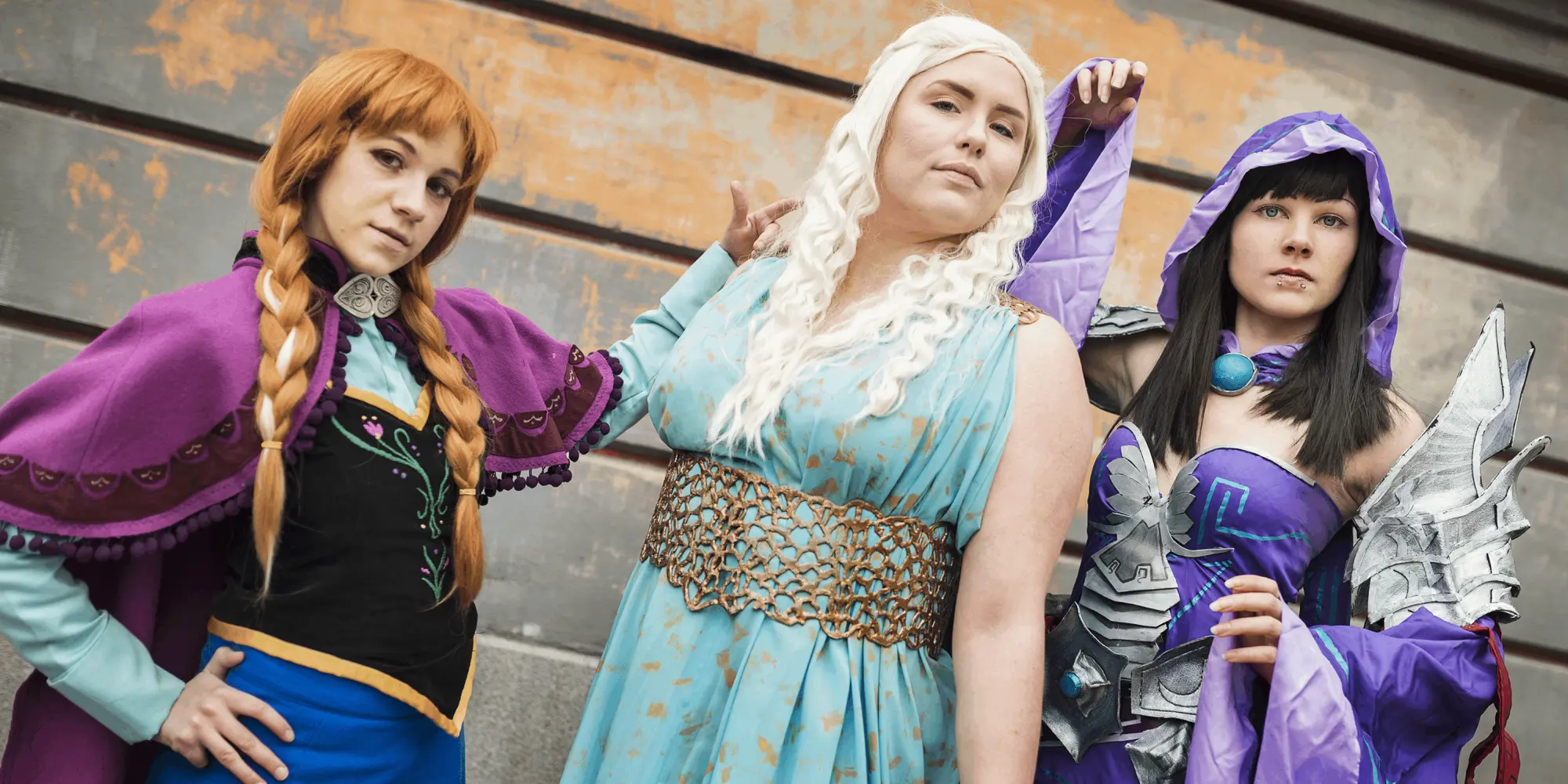
Teater handlar om att kliva in i en annan människas skor – att utforska känslor, relationer och berättelser i nuet. Genom skådespeleri får du leva olika karaktärer, känna in scener och uttrycka dig med både kropp och röst. Det handlar inte bara om att memorera repliker – det handlar om att kommunicera mänsklighet, närvaro och känsla.
En viktig del av teaterkursen är improvisation och samarbete. Du får öva samspel, lyssna på vad andra skådespelare gör och agera spontant i olika situationer. Det stärker din förmåga att vara närvarande på scen och skapa äkta kontakt – med både publik och medspelare.
Teater är lika mycket ett grupparbete som en individuell process. Tillsammans skapar ni scener som lever, känns och fortsätter att utvecklas över tid.
Vi erbjuder teaterkurser för såväl barn och ungdomar som vuxna – på nybörjar- och fortsättningsnivå. Oavsett om du är helt ny eller har spelat tidigare, så möter våra instruktörer dig där du är. Kurserna utvecklar både den tekniska färdigheten, uttrycksbarheten och din egen sceniska identitet.
Teater är mer än en konstform – det är en utvecklande väg mot inre styrka och självsäkerhet:
Många deltagare märker även positiva effekter i vardagen – som att känna sig tryggare i samtal, på möten eller när man ska tala inför grupp.
Våra teaterkurser för barn och ungdomar är fyllda med lek, fantasi och kreativitet. Barnen arbetar med rollekar, improvisationsövningar och enklare scenframställningar – alltid i trygghet och samspel. Många kurser leds som teaterlek eller ensemble, där gruppen skapar tillsammans, vilket stärker både kreativitet och självförtroende.
Vill du våga mötas på scen, bli bättre på att kommunicera eller bara känna skaparglädjen i samspel med andra? En teaterkurs hos Medborgarskolan är en kreativ resa för kroppen, rösten och fantasin. Du behöver inte ha tidigare erfarenhet – bara nyfikenhet och en vilja att prova.
Anmäl dig idag och ta steget in i berättelsen – på scen och i livet.
Genom teater lär man sig att uttrycka känslor, utveckla sin kreativitet och förbättra sina kommunikationsfärdigheter. Det stärker självförtroendet och förmågan att arbeta i grupp. Teater ger också insikt i mänskligt beteende och samhällsfrågor.
Teater är den faktiska framförandet av pjäser inför en publik, medan drama kan avse både processen att skapa teater och själva innehållet i en pjäs. Drama kan också innefatta dramapedagogik och andra former av dramatisk konst utan att nödvändigtvis framföras på en scen.
Teaterkurser för barn fokuserar på att utveckla kreativitet, självförtroende och samarbetsförmåga genom lekfulla övningar och improvisation. Barnen får prova på olika roller och scenarier, vilket hjälper dem att uttrycka sig och förstå olika perspektiv.
Improvisationsteater är en form av teater där skådespelarna skapar scener och dialoger i stunden, utan förberett manus. Det kräver snabb tänkande, kreativitet och förmågan att samarbeta med andra skådespelare för att skapa en sammanhängande berättelse.
Om du vill börja spela teater, var beredd att utforska och utmana dig själv. Börja med en kurs för att lära dig grundläggande tekniker och våga prova olika roller. Att ha en öppen och positiv inställning till feedback är också viktigt för att utvecklas.
Din sökning på "" visar 38 resultat i
Sortera på:
En plats kvar
Fullbokad. Anmäl dig som reserv!
Fullbokad. Anmäl dig som reserv!
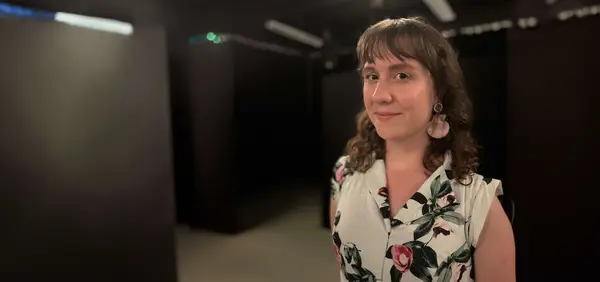
När Medborgarskolans teatergrupp satte upp sin omarbetade version av Shakespeares drama ”En midsommarnattsdröm” fanns ett 40-tal förväntansfulla föräldrar i pub...
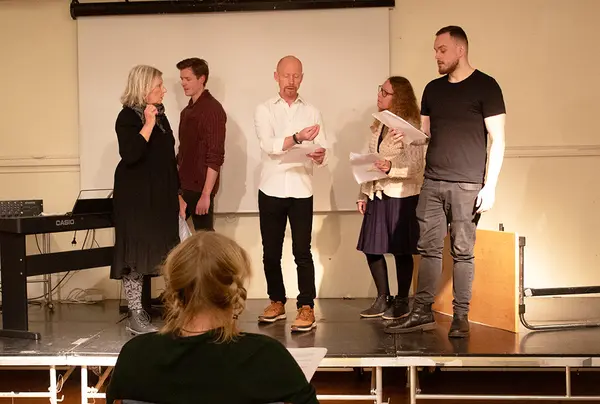
Att säga ”spagetti” på ett väldigt, väldigt argt sätt är inte så lätt alla gånger. Eller att säga det fnissigt, nervöst eller frustrerat. Det får deltagarna på ...